
Bathroom Fall Prevention: A Room-by-Room Safety Guide
Wet, hard, and cramped, the bathroom is the single most dangerous room for a senior. The good news: most of the risk can be removed with a handful of changes, many of them quick and inexpensive.
Founder & Senior Care Researcher
Practical safety guidance based on occupational-therapy and home-modification principles. For weight-bearing grab bars, professional installation into studs is strongly advised.
Key takeaways
- The bathroom causes a large share of senior falls because it combines water, hard surfaces, and tight spaces — but most of that risk is removable.
- The highest-impact fixes are grab bars (properly anchored), non-slip footing in and out of the tub, and a higher or safer toilet setup.
- Start with quick, cheap wins (non-slip mats, a raised toilet seat, better lighting) before considering bigger remodels.
- A suction grab bar steadies balance only — for pulling up or catching a fall, use a drilled, stud-anchored bar.
- Pair the room changes with the person’s own steadiness — balance exercises and the right mobility aid.
Quick answer
How do I make a bathroom safe for an elderly person?
Focus on three things first: install grab bars by the toilet and in the shower/tub (drilled into studs for weight-bearing), add non-slip mats or strips inside and outside the tub, and make the toilet easier with a raised seat or safety rails. Then improve lighting and remove throw rugs. These cover the great majority of bathroom fall risk. Explore products in our grab bars and non-slip bath mats reviews.
Why the bathroom is so dangerous
No other room concentrates so many hazards in such a small space. Water makes smooth surfaces slippery; the surfaces themselves — tile, porcelain, the edge of a tub — are hard and unforgiving in a fall; and the room is often too cramped for a walker or a helper. On top of that, the bathroom is where people perform some of the riskiest movements of the day: stepping over a tub wall, sitting and standing from a low toilet, and turning in a confined space, often alone and undressed.
That combination is exactly why the bathroom deserves the first and most thorough attention in any home safety review. The rest of this guide fixes each hazard in turn.
Start here: quick, inexpensive wins
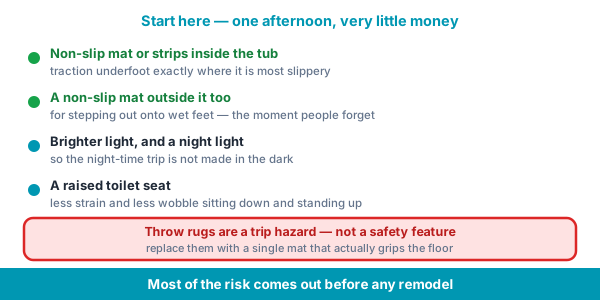
Before any remodeling, these low-cost changes remove a surprising amount of risk in an afternoon:
- Non-slip mat or adhesive strips inside the tub/shower — traction underfoot where it is most slippery. See non-slip bath mats.
- A non-slip bath mat outside the tub for stepping out onto wet feet — and remove any loose throw rugs, which are trip hazards, not safety features.
- Brighter lighting and a night light so the night-time bathroom trip is not made in the dark.
- A raised toilet seat to reduce the strain and instability of sitting and standing — see raised toilet seats.
- A long-handled sponge and a [handheld shower head](/reviews/best-handheld-shower-heads-for-seniors) so the person can wash without twisting or reaching off-balance.
Good to know
Throw rugs feel cozy but are one of the most common bathroom trip hazards. Replace them with a single non-slip mat that grips the floor.
Grab bars: the single most important upgrade
If you do one substantial thing, install grab bars. They give a secure handhold exactly where balance is most challenged — beside the toilet and in the shower or tub. But how they are mounted determines whether they save a fall or cause one. If the cost or the drilling is the barrier, see who installs grab bars and how to get installation free or low-cost.
- Drilled, stud-anchored bars screw into the wall studs (or solid blocking) and can bear real weight — the only kind to trust for pulling up or catching a fall.
- Suction grab bars attach to smooth tile by vacuum with no drilling. They are fine for light balance support only and must be re-checked before every use — never rely on them to hold full weight.
Placement matters as much as the bar: a vertical bar at the tub entry helps with stepping in and out; a horizontal or angled bar along the wall supports sitting and standing. Our grab bar placement guide covers exactly where and how high, and the best grab bars and grab bars for bathtubs reviews compare models.
Safety first
Never use a towel bar or soap dish as a handhold — they are not built for body weight and pull straight out of the wall. Only a properly anchored grab bar is safe to lean on.
Making the shower and tub safe
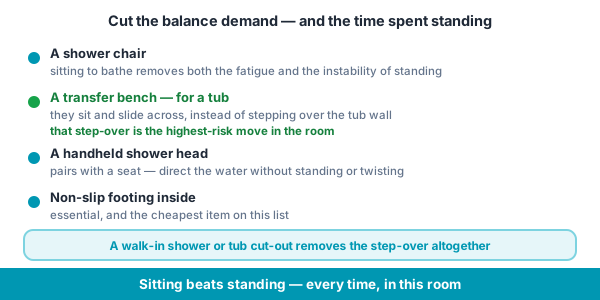
Getting in and out of the tub — and standing through a shower — is where many bathroom falls happen. Reduce both the balance demand and the time spent standing:
- A shower chair or transfer bench lets the person sit to bathe, removing the fatigue and instability of standing. A transfer bench is ideal for a tub, letting them sit and slide across rather than step over the wall. See shower chairs for seniors.
- A handheld shower head pairs with a seat so they can direct water without standing or twisting.
- Non-slip footing inside is essential — see the quick-wins above.
- For a bigger change, a walk-in shower or a tub cut-out removes the step-over entirely; this is a remodel, covered below.
A safer toilet setup
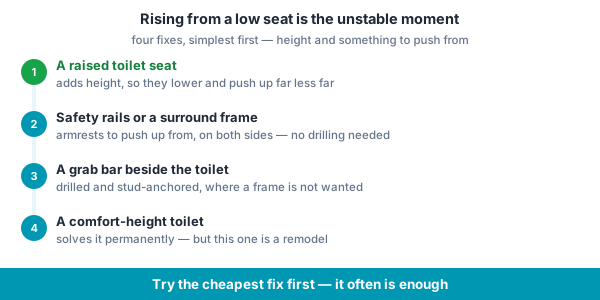
Standard toilets sit low, and rising from a low seat is a common moment of instability. Options, from simplest to most involved:
- A raised toilet seat adds height so the person does not have to lower and push up as far — see raised toilet seats.
- Toilet safety rails or a surround frame give armrests to push up from on both sides — see toilet safety rails.
- A grab bar beside the toilet (drilled) supports sitting and standing where a frame is not wanted.
- A comfort-height (taller) toilet solves it permanently in a remodel — see tall toilets for seniors.
If the person is also managing incontinence, our guides on managing incontinence at home cover the wider routine.
When to consider a bigger remodel
For long-term needs or significant mobility loss, structural changes remove hazards that add-ons only manage. Weigh these against budget and how long the home will be lived in:
| Change | What it solves | Scale |
|---|---|---|
| Walk-in shower (curbless) | Removes the step-over into a tub entirely | Major remodel |
| Tub-to-shower conversion or tub cut-out | Eliminates climbing over a tub wall | Moderate |
| Comfort-height toilet | Permanent fix for low-toilet strain | Plumbing job |
| Wider doorway | Lets a walker or wheelchair enter | Structural |
| Non-slip flooring | Traction across the whole room | Flooring job |
Good to know
An occupational therapist can assess the bathroom and recommend exactly which changes give the most safety for the budget — a worthwhile step before a big spend.
Safe habits and the bigger picture
Equipment works best alongside safe routines and a steadier person:
- Never rush — move slowly on wet surfaces and give blood pressure a moment after standing.
- Keep everything needed within easy reach so there is no stretching or turning off-balance.
- Consider a medical alert device that is waterproof or has a bathroom button, since falls here often happen alone.
- Keep the person as strong and steady as possible with balance exercises, and make sure any mobility aid fits through the door and is used right up to the point of transfer.
The bathroom is the most important room to get right, but it is one part of a whole-home approach — continue with our senior home safety guide and, if falls are recurring, why an elderly parent keeps falling.
Frequently asked questions
Why do so many falls happen in the bathroom?
The bathroom combines slippery wet surfaces, hard unforgiving materials (tile, porcelain, tub edges), and a cramped space, with high-risk movements like stepping over a tub wall and rising from a low toilet — often done alone. That mix makes it the most fall-prone room in the home.
What is the most important bathroom safety upgrade?
Properly anchored grab bars beside the toilet and in the shower or tub, combined with non-slip footing. Grab bars give a secure handhold exactly where balance is most challenged. For weight-bearing, they must be drilled into studs, not attached with suction.
Are suction grab bars safe?
Only for light balance support, and only on smooth, non-porous tile — and they must be checked before every use. They can release without warning, so they should never be used to pull up full body weight or to catch a fall. For that, use a drilled, stud-anchored bar. See our grab bars for bathtubs review.
How can I make the toilet safer for an elderly person?
Add height and support: a raised toilet seat reduces how far they lower and rise, toilet safety rails or a surround frame give armrests to push up from, and a grab bar beside the toilet helps too. A comfort-height toilet is the permanent remodel solution.
What can I do quickly and cheaply to prevent bathroom falls?
In an afternoon: put non-slip mats inside and outside the tub, remove loose throw rugs, add brighter lighting and a night light, fit a raised toilet seat, and add a handheld shower head. These low-cost changes remove a large share of the risk before any remodeling.
Should an elderly person shower sitting down?
For anyone with balance issues or who tires standing, yes — a shower chair or transfer bench removes the instability of standing and, for a tub, the danger of stepping over the wall. Pair it with a handheld shower head so they can wash without twisting.
