
Mobility and Fall Prevention: How They Work Together
It sounds like a paradox: staying active is one of the best ways to prevent falls, yet moving is when falls happen. The resolution is safe mobility — and this guide shows how movement, strength, aids, and home safety fit together.
Founder & Senior Care Researcher
Educational guidance, not medical advice. New exercise or major mobility changes should be discussed with a doctor or physical therapist.
Key takeaways
- Staying mobile and active is one of the best ways to prevent falls — immobility weakens the body and *raises* fall risk.
- But mobility must be safe — the goal is keeping people moving *and* protecting them, not choosing one over the other.
- The pillars work together: strength and balance, the right mobility aid, home safety, good footwear, and managing health factors.
- The "use it or lose it" cycle is real — fear and inactivity lead to weakness, which leads to more falls; staying active breaks it.
- Combine this overview with our fuller fall prevention and balance exercises guides.
Quick answer
How do mobility and fall prevention work together?
Staying mobile and active is itself a powerful fall-prevention tool — movement maintains the strength, balance, and confidence that keep people on their feet, while inactivity weakens the body and *increases* fall risk. The key is safe mobility, combining strength and balance work, the right mobility aid, home safety, good footwear, and managing health factors (medications, vision, blood pressure). Together these keep a person both moving and protected — see our fall prevention and balance guides.
The mobility–falls paradox
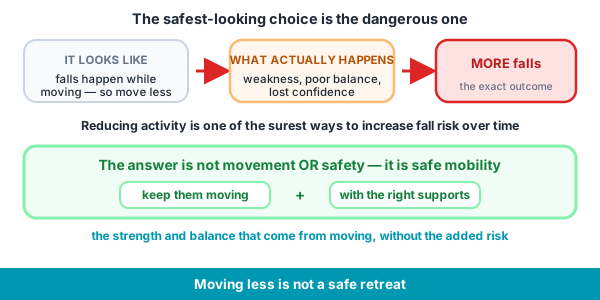
There is an apparent contradiction at the heart of fall prevention: falls happen while people are moving, so it can seem that the safest thing is to move less. Yet the opposite is true — reducing activity is one of the surest ways to *increase* fall risk over time, because it leads to weakness, poor balance, and lost confidence.
The resolution is not to choose between movement and safety, but to combine them: safe mobility. Keeping a person active while protecting them with the right supports gives the best of both — the strength and balance that come from moving, without the added risk. This guide shows how the pieces fit together, tying our other guides into one picture; for the full fall-prevention detail, see why an elderly parent keeps falling.
The "use it or lose it" cycle
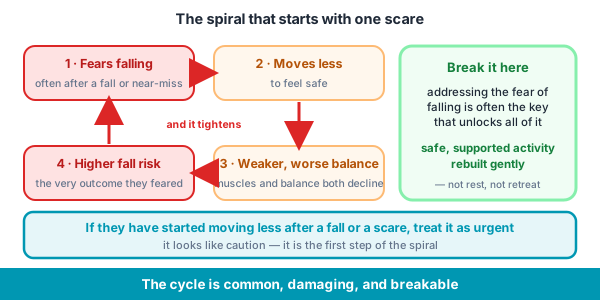
Understanding one vicious cycle explains why staying active matters so much. It often starts with a fall or a fear of falling, and spirals:
- A person fears falling (often after a fall) and moves less to feel safe.
- Reduced activity leads to weaker muscles and poorer balance.
- Weaker muscles and balance mean a higher risk of falling — the very outcome they feared.
- A fall (or near-miss) deepens the fear, and the cycle tightens.
This downward spiral is common and damaging — and staying safely active is how to break it. Addressing the fear of falling is often the key that unlocks the whole cycle.
Good to know
If a senior has started moving less after a fall or scare, treat that as an urgent priority, not a safe retreat. Gently rebuilding safe activity — with support — is what stops the weakness-and-falls spiral before it takes hold.
Pillar 1: Strength and balance
The foundation of both mobility and fall prevention is physical capacity — the strength and balance to move safely and recover from a stumble:
- Strength training — especially of the legs and core, maintains the power to walk, stand, and catch oneself; even gentle resistance work helps.
- Balance exercises — directly improve steadiness and reduce falls; see balance exercises for seniors.
- Regular safe activity — walking and gentle exercise maintain the whole system; see how caregivers can help seniors exercise safely.
- Rebuilding after illness — deconditioning after a hospital stay needs deliberate, safe rebuilding.
Pillar 2: The right aid and footwear
Physical capacity is supported by the right equipment, which enables safe movement:
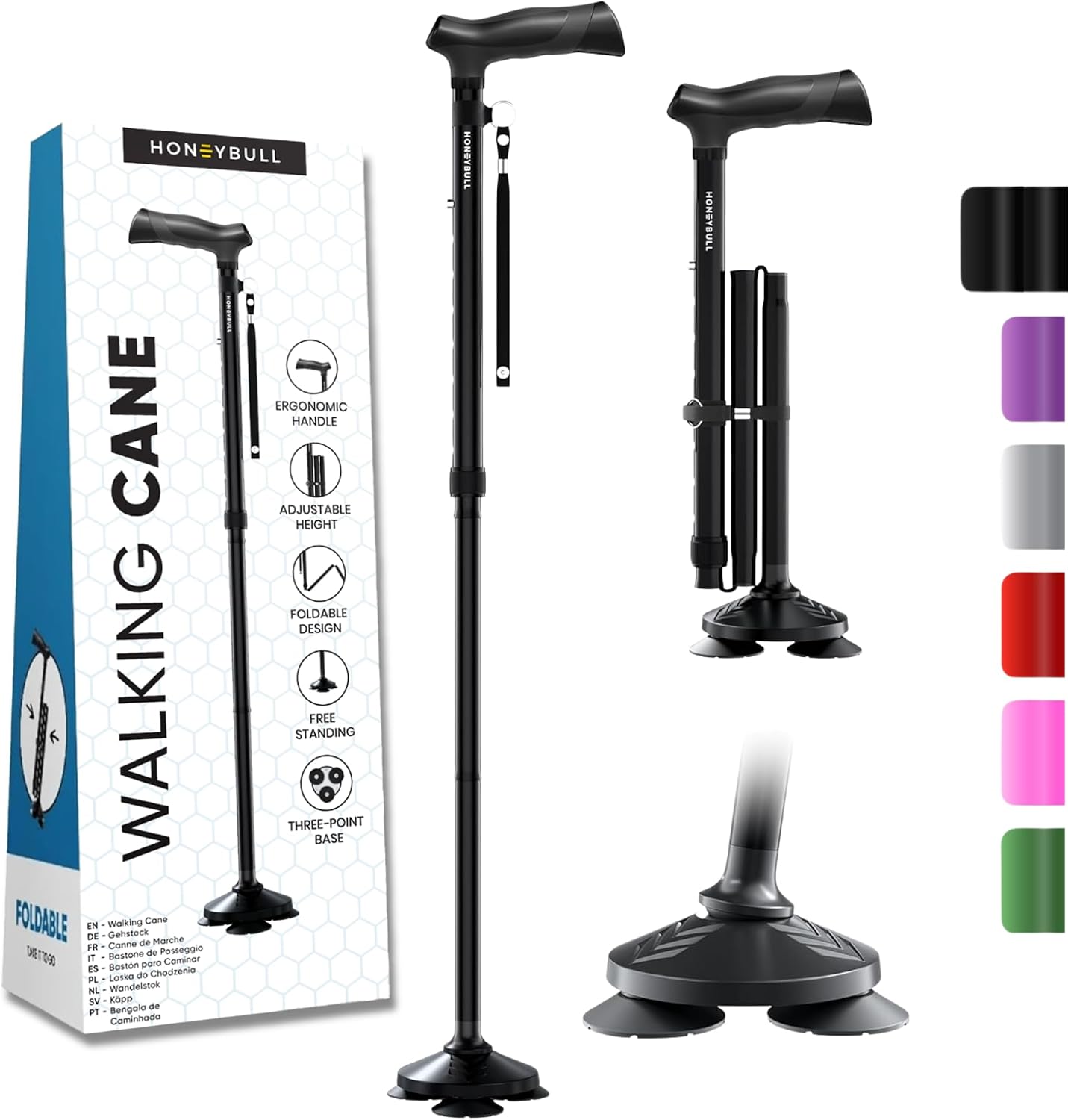
- The right mobility aid, correctly fitted — a cane, walker, or rollator matched to the person’s needs keeps them moving safely; see walker vs cane and rollator vs walker.
- Safe technique — using the aid correctly, including on transfers; see safe transfer techniques and how to help an elderly person stand up.
- Good footwear — supportive, non-slip shoes make a real difference to stability; avoid loose slippers and socks.
Pillar 3: Home safety and health factors
The final pieces make the *environment* and the *body’s systems* safe for movement:
- Home safety — clear paths, lighting, removed rugs, grab bars, and handrails let a person move safely at home; see senior home safety and night-time safety.
- Medication review — some drugs cause dizziness or drowsiness that raise fall risk; see medication management.
- Vision and hearing — both affect balance and awareness; see low vision aids and hearing loss and fall risk.
- Blood pressure and other factors — dizziness on standing and other treatable issues; raise a sudden increase in falls with the doctor.
- A way to call for help — a medical alert device means a fall brings help fast, which also supports the confidence to stay active.
Putting it together
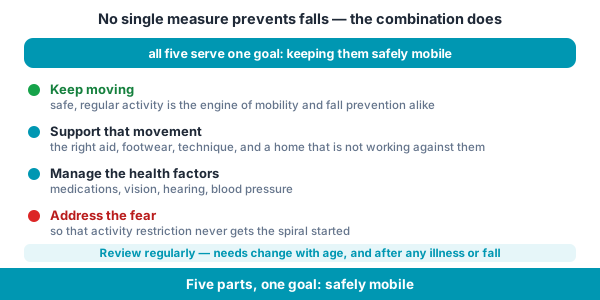
No single measure prevents falls; it is the combination that works, all serving the same goal of keeping a person safely mobile:
- Keep moving — safe, regular activity is the engine of both mobility and fall prevention.
- Support that movement — with the right aid, footwear, technique, and a safe home.
- Manage the health factors — medications, vision, hearing, and blood pressure.
- Address the fear — so activity restriction does not start the downward spiral; see fear of falling.
- Review regularly — needs change, so revisit the aid, exercises, and home as the person ages or after any illness or fall.
For the complete fall-prevention playbook, see why an elderly parent keeps falling.
Frequently asked questions
Does staying active help prevent falls?
Yes — staying mobile and active is one of the best ways to prevent falls, because movement maintains the strength, balance, and confidence that keep people on their feet, while inactivity weakens the body and increases fall risk. The key is safe mobility: staying active while supported by the right aids, home safety, and good technique.
Why does moving less increase fall risk?
Reduced activity leads to weaker muscles, poorer balance, and lost confidence, all of which raise the risk of falling — the very outcome inactivity was meant to avoid. This creates a vicious "use it or lose it" cycle where fear and inactivity cause weakness, weakness causes falls, and falls deepen the fear. Staying safely active breaks the cycle.
How do mobility aids help prevent falls?
The right mobility aid, correctly fitted and used, provides the support and stability a person needs to move safely, enabling them to stay active rather than restricting movement out of fear. A cane, walker, or rollator matched to their needs keeps them mobile while reducing fall risk — but it must be well fitted and combined with good technique and home safety.
What is the best way to prevent falls in the elderly?
There is no single measure — the combination works: safe regular activity for strength and balance, the right well-fitted mobility aid and supportive footwear, a fall-proofed home, managing health factors (medications, vision, hearing, blood pressure), addressing fear of falling, and having a way to call for help. Our fall prevention guide covers the full approach.
How do I help a fearful senior stay active safely?
Address the fear of falling directly, since it drives the activity-restriction spiral, and rebuild activity gradually with support — the right mobility aid, a safe environment, supervised exercise, and a medical alert device for confidence. Gentle strength and balance work, ideally guided by a physical therapist, rebuilds both capacity and confidence. See our fear of falling guide.
Should a senior who has fallen move less to stay safe?
No — while it feels safer, moving less after a fall actually increases future fall risk by causing weakness and poor balance, and it can start a damaging downward spiral. The safer path is to rebuild activity gradually with proper support and address any fear, so the person stays strong, steady, and confident. This should be a priority, not a retreat into inactivity.
