
Grab Bar Placement Guide: Where and How to Install Them
A grab bar is only as safe as its placement and mounting. Put in the right spots and anchored properly, grab bars prevent falls at the most dangerous moments — here is where they go and how to install them right.
Founder & Senior Care Researcher
General guidance, not a substitute for professional installation. For weight-bearing bars, secure mounting into structure is essential; heights should suit the individual and meet local codes.

Key takeaways
- Place grab bars at the highest-risk moments — beside the toilet, entering/inside the shower or tub — and where the person naturally reaches.
- Secure mounting is everything — anchor into wall studs or solid blocking; a bar that pulls loose is worse than none.
- Set heights to suit the individual — general ranges exist, but fit the person’s height and reach; involve them in positioning.
- Match the bar type to the spot — angled, vertical, and horizontal bars each suit different movements.
- Suction bars are for balance only, not weight-bearing — use bolted bars where full support is needed.
Quick answer
Where should grab bars be placed for seniors?
Place them at the riskiest points: beside the toilet (a horizontal or angled bar within easy reach to push up from), at the shower/tub entrance (a vertical bar to steady stepping in), and inside the shower/tub (a horizontal or angled bar for washing and transfers). Anchor them securely into wall studs or solid blocking — this is essential for weight-bearing bars. Set heights to suit the individual, match the bar type to the movement, and never rely on suction bars for full weight.
The two things that make a grab bar safe
A grab bar prevents falls only if it is in the right place and mounted so it can be trusted with the person’s weight. Those two things — placement and secure mounting — matter more than anything else, because a bar in the wrong spot goes unused, and a bar that pulls out of the wall when grabbed can cause the very fall it was meant to prevent.
This guide covers where grab bars go and how to install them safely. Grab bars are a cornerstone of bathroom fall prevention and senior home safety. For weight-bearing installations, professional fitting is well worth it; the guidance here helps you plan and understand what good looks like. If paying for it is a concern, see free grab bar installation and who installs them.

Sponsored Pick
12-Inch Suction Shower Grab Bar (Silver)
Tight tub or shower spaces that need a short, unobtrusive grab point
Check it outSecure mounting — non-negotiable
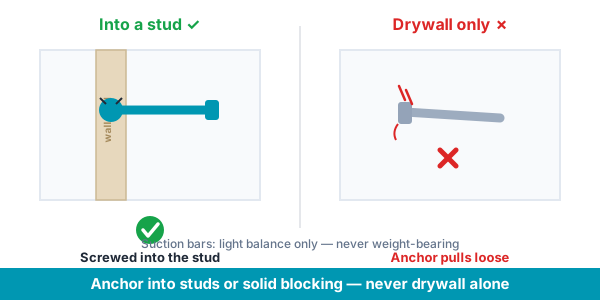
Before placement, understand mounting, because it determines whether a bar is safe:
- Anchor into structure — a weight-bearing grab bar must be screwed into wall studs, or into solid blocking installed behind the wall, not into plasterboard/drywall alone. Drywall anchors are not sufficient for a bar that must hold a falling person’s weight.
- Use appropriate fixings — the bar’s proper mounting screws into the stud/blocking; in tiled areas, drill carefully to avoid cracking tiles.
- Test it — once fitted, a correctly mounted bar should not move, flex, or loosen under a firm, full-weight pull.
- Consider professional installation — for reliable weight-bearing bars, a professional ensures anchoring into structure, which is the whole point. This is not the place to cut corners.
- Know the limits of suction bars — suction grab bars are quick and tool-free but are for light balance support only and can fail; never use them where full weight-bearing support is needed.
Safety first
A grab bar that pulls loose is more dangerous than no bar, because the person trusts it with their full weight at the worst moment. Anchor weight-bearing bars into studs or solid blocking, test them under a full pull, and use professional installation when in doubt.
By the toilet
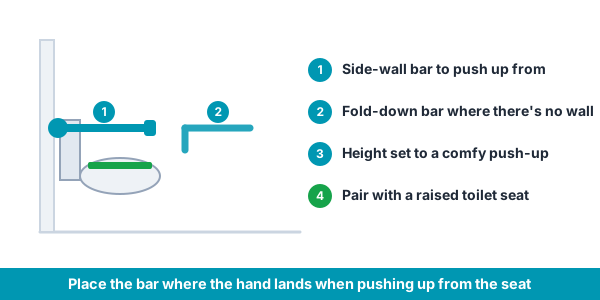
Getting on and off the toilet is a frequent fall point, especially for weaker or recovering seniors:
- A horizontal or angled bar on the side wall (nearest the toilet) gives something to push up from and lower down onto.
- Where there is no side wall, floor-mounted or fold-down/swing-away bars attached to the wall behind can provide support on the open side.
- Height — commonly around toilet-seat-to-handrail height that lets the person push up comfortably; fit it to the individual’s height and reach by testing the natural pushing position.
- Pair with a [raised toilet seat](/reviews/best-raised-toilet-seats-for-seniors) if sitting/standing is hard, which reduces the distance and effort.
Shower and bathtub
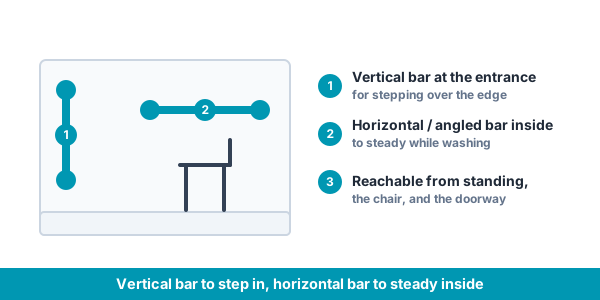
The shower and tub are the highest-risk spots, combining water, slick surfaces, and stepping over edges:
- At the entrance — a vertical bar at the shower or tub entry gives a secure handhold while stepping in and out over the threshold, the moment of greatest risk.
- Inside the shower — a horizontal or angled bar on the wall to steady the person while standing and washing, and to support lowering onto a shower chair.
- For a bathtub — bars to support the deep step in and out; see grab bars for bathtubs. An angled bar can assist both stepping and lowering.
- Reachable from key positions — from standing, from the chair, and from the doorway; position them where the person actually reaches, ideally testing with them.
- Combine with non-slip mats and a handheld shower head for seated washing.
Bar types and heights
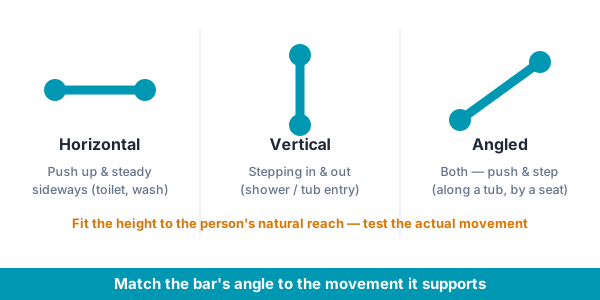
Different bars suit different movements, and getting height and angle right makes them usable:
- Horizontal bars — good for pulling up and steady lateral support (pushing up from the toilet, steadying while washing).
- Vertical bars — good for stepping in/out and for a hand-over-hand grip while moving up or down (shower entry).
- Angled (diagonal) bars — a versatile compromise that supports both pushing and stepping, useful along a tub or beside a shower seat.
- Fit height to the person — general ranges exist (and local accessibility codes give standard heights), but the reliable method is to have the person reach naturally and place the bar where their hand comfortably lands for the movement it supports.
- Size and grip — choose a diameter that is easy to grip firmly, with a textured, non-slip finish, and enough clearance from the wall for a full hand grip.
Good to know
Involve the person in positioning. Have them mimic the movement — sitting/standing at the toilet, stepping into the shower — and mark where their hand naturally reaches. A bar placed to their actual reach gets used; a "textbook" bar they have to stretch for does not.
Beyond the bathroom
Grab bars and rails help elsewhere too:
- Stairs — secure handrails on both sides are essential; see senior home safety.
- Entrances and steps — a rail or grab bar by the front/back door and any thresholds.
- Bedside — a bed assist handle serves a similar role for getting in and out of bed; see safe bedroom setup.
- Hallways — a rail along a long or frequently used route where the person tends to steady themselves on furniture.
Explore options in our reviews of grab bars for seniors and suction grab bars, remembering the weight-bearing distinction.
Frequently asked questions
Where should grab bars be installed for seniors?
At the highest-risk points: beside the toilet (a horizontal or angled bar to push up from), at the shower or tub entrance (a vertical bar to steady stepping in and out), and inside the shower or tub (a horizontal or angled bar for washing and transfers). Also consider stairs (rails both sides), entrances, and the bedside. Place bars where the person naturally reaches, testing with them.
How do you securely install a grab bar?
Anchor weight-bearing grab bars into wall studs or into solid blocking installed behind the wall — not into drywall alone, as drywall anchors cannot reliably hold a falling person’s weight. Use the bar’s proper mounting screws, drill carefully in tiled areas, and test that the fitted bar does not move or flex under a firm full-weight pull. Professional installation is worthwhile for reliability.
What height should a grab bar be?
While general ranges and local accessibility codes give standard heights, the reliable method is to fit the height to the individual: have them mimic the movement (standing from the toilet, stepping into the shower) and place the bar where their hand naturally and comfortably lands. A bar set to their actual reach gets used; one placed by the book that they must stretch for often does not.
Are suction grab bars safe?
Suction grab bars are quick to fit and tool-free, but they are only for light balance support — not weight-bearing — and can lose suction and fail. Never rely on them to hold a person’s full weight or to stop a fall. Where genuine support is needed, use a bolted bar anchored into studs or blocking; reserve suction bars for light steadying only.
What type of grab bar is best?
It depends on the movement: horizontal bars suit pulling up and steady lateral support (toilet, washing), vertical bars suit stepping in and out and hand-over-hand grip (shower entry), and angled bars are a versatile compromise supporting both pushing and stepping. Choose a diameter that is easy to grip firmly, with a non-slip textured finish and enough wall clearance for a full grip.
Can I install grab bars myself?
You can, but the critical requirement is anchoring weight-bearing bars into wall studs or solid blocking and testing them under a full-weight pull — a bar that pulls loose is more dangerous than none. If you are not confident of hitting structure (especially in tiled or hollow walls), professional installation is well worth it. Suction bars fit without tools but are for light balance only.
