
Senior Care · Product Review
ComfiLife Gel Enhanced Memory Foam Seat Cushion Review

The ComfiLife pairs memory-foam contouring with a cooling gel layer and a U-shaped tailbone cutout — a balanced all-rounder for long sitting.
The ComfiLife Gel Enhanced Memory Foam Seat Cushion is the cushion we recommend first for most seniors who spend a lot of the day sitting. It does the two things that matter most well: the U-shaped cutout lifts pressure off the tailbone, and the cooling gel layer stops the heat buildup that makes plain foam uncomfortable over long stretches. A built-in handle and non-slip base mean it genuinely moves between a recliner, an office chair, a wheelchair, and the car.
Two things are worth knowing before you buy, and neither is a dealbreaker. At 17.5 × 13.7 in it is built to support the sit-bones in the middle of the seat rather than cover a whole chair — measure yours. And it is medium-firm: ComfiLife asks for 24–48 hours of settling in, and memory foam is firmer in a cold room. Most "too hard" first impressions are day-one impressions.
It isn't the answer to every problem. If you're at real risk of pressure sores, an air-cell cushion is the clinical choice; if you want aggressive posture or sciatica correction, a firmer sculpted cushion targets that better. But as a balanced, washable, sit-anywhere cushion for everyday comfort, it's hard to beat — which is why it's our Best Overall pick.
We may earn a commission when you buy through links on this page, at no extra cost to you. Read our affiliate disclosure.

ComfiLife Gel Enhanced Memory Foam Seat Cushion
- Balanced all-rounder for long, everyday sitting
- Cooling gel layer resists the heat buildup plain foam causes
- U-shaped cutout takes pressure off the sensitive tailbone
- Non-slip rubber base keeps it put on almost any chair
- Built-in handle makes it genuinely portable between chairs and the car
- Removable, machine-washable velour cover makes it easy to keep clean
Fill
High-density memory foam + cooling gel layer
Size
17.5 x 13.7 x 2.8 in
Shape
U-shaped coccyx (tailbone) cutout
Cover
Zippered velour, removable & machine-washable
Base
Non-slip rubber bottom
Carrying
Built-in handle
Feel
Medium-firm; 24-48 h to settle in
Best use
Recliner, office chair, wheelchair, car, travel
What we like
- Balanced all-rounder for long, everyday sitting
- Cooling gel layer resists the heat buildup plain foam causes
- U-shaped cutout takes pressure off the sensitive tailbone
- Non-slip rubber base keeps it put on almost any chair
- Built-in handle makes it genuinely portable between chairs and the car
- Removable, machine-washable velour cover makes it easy to keep clean
- Firm-but-contouring support that holds its shape over time
Worth noting
- Covers the middle of the seat, not the whole chair — 17.5 x 13.7 in, so measure first
- Medium-firm, and firmer still in a cold room — ComfiLife asks for 24-48 hours to settle
- Sits higher on a plush or bucket seat, so you may need to lower the chair
- The gel layer adds a little weight versus a plain-foam cushion
- A comfort cushion, not a clinical pressure-sore cushion for high-risk skin
Buy it if…
- You sit for hours and want tailbone and hip relief
- You run warm, or your current cushion traps heat
- You want one cushion that moves between recliner, office chair, and car
- You want a low-effort, washable, sit-anywhere option
Look elsewhere if…
- You’re at genuine risk of pressure sores — see air-cell cushions
- You want a plush, sink-in softness rather than firm support
- You need the whole seat covered, or have a deeply contoured car seat
- You need aggressive posture or sciatica correction from a sculpted shape
Why long sitting starts to hurt in the first place
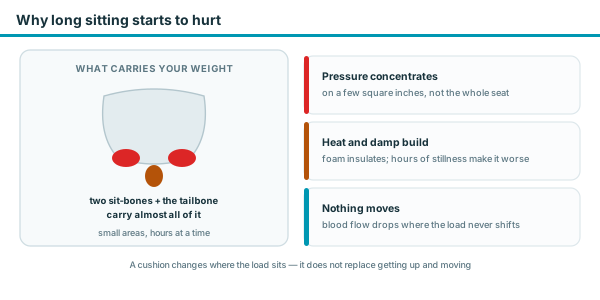
Sitting looks like rest, but for the body it is a loading problem. Almost the whole of your seated weight passes through three small areas: the two sit-bones (the ischial tuberosities, the bony points you can feel under each buttock) and, further back, the tailbone. On a flat, firm chair those few square inches carry everything.
Three things then compound over an afternoon. Pressure stays concentrated instead of spreading across the thighs. Heat and moisture build, because foam and upholstery insulate. And nothing moves — the load never shifts off the same tissue, which is uncomfortable long before it is anything more serious.
A contoured cushion with a cutout attacks the first of those directly: it spreads load across a wider area and takes the tailbone out of contact altogether. The gel layer helps with the second. Nothing helps with the third except moving — and no cushion replaces standing up periodically and shifting position, which matters most for anyone with limited mobility.
Design and construction
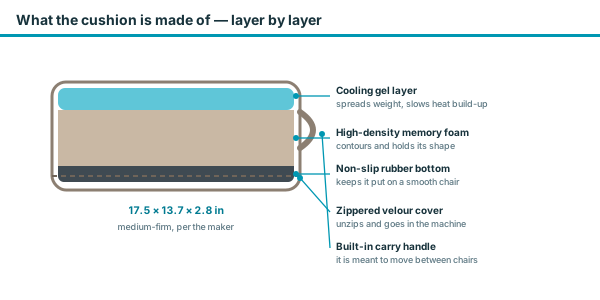
The ComfiLife is built in two layers. Underneath is a block of high-density memory foam that contours to your shape and, importantly, holds that shape rather than flattening out after a few weeks. On top sits a cooling gel layer — the feature that separates it from a plain-foam cushion — which spreads weight and helps regulate temperature.
The shape is the other half of the design. Instead of a flat pad, the cushion uses a U-shaped cutout at the back that removes contact under the tailbone, and a gently contoured seat that cradles the hips and thighs. The whole thing sits inside a zippered velour cover that unzips for the washing machine, over a non-slip rubber base that keeps it from sliding on a smooth chair.
One small feature does more work than it sounds like: a built-in carry handle. For a cushion whose main argument is that it follows the person from the recliner to the car, a handle is the difference between a cushion that travels and one that stays put.
None of this is exotic, and that’s the point: it’s a well-executed version of the design most orthopedic cushions are reaching for, which is what makes it such a reliable default.
Comfort and tailbone (coccyx) pressure relief
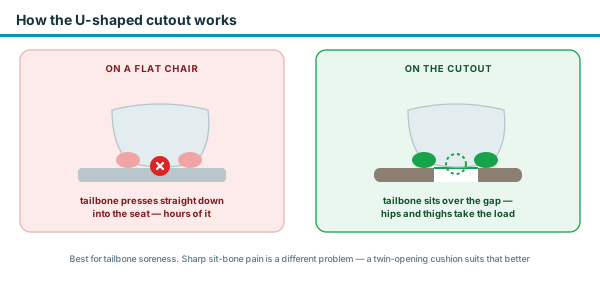
The U-shaped cutout is the reason to buy this cushion. When you sit on a flat surface, your body weight presses the tailbone down against the chair; over hours, that pressure is what turns into a dull ache — or real pain if the tailbone is bruised or healing. The cutout removes contact under the coccyx entirely, so you’re supported by the hips and thighs while the tailbone floats free.
That makes it a strong choice for seniors with ongoing tailbone pain, anyone recovering from a tailbone injury, and people who simply can’t get comfortable in a hard chair. The contoured seat also spreads pressure across the sit-bones and hips rather than concentrating it, which is what makes long sitting sessions bearable.
One honest caveat: if your discomfort is sharp sit-bone pain rather than tailbone pain, a twin-opening "socket" cushion targets that better. And for genuine skin-breakdown risk, cushion type becomes a clinical decision — more on that below.
The cooling gel, and how firm it actually feels
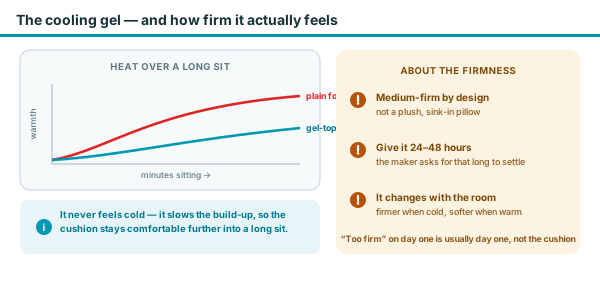
Heat is the quiet enemy of foam cushions. Memory foam is comfortable but insulating — it traps body heat, and after an hour or two you’re sitting on something warm and a little clammy. For a senior who sits most of the day, that’s a real comfort issue, not a minor one.
The gel layer is ComfiLife’s answer. It doesn’t make the cushion feel cold, but it does spread heat and slow the buildup, so the cushion stays comfortable further into a long sitting session than plain foam would. If you or the person you’re shopping for runs warm, or complains that the current cushion "gets hot," this is the single most useful thing the ComfiLife adds.
Firmness is where first impressions mislead. This is a medium-firm cushion, not a plush one, and two things make a new one feel harder than it will be. ComfiLife asks for 24 to 48 hours after unpacking for the foam to fully adjust. And memory foam is temperature-sensitive by nature — the brand notes it feels firmer in the cold and softer in the warm, with room temperature ideal. A cushion delivered in winter and sat on straight out of the box is being judged at its hardest.
ComfiLife is also plain that this is a comfort product: it describes the cushion as medium-firm, made to reduce sitting pressure on firm flat chairs, explicitly not a medical treatment, with results varying by chair and body type. That is an unusually honest line from a manufacturer, and it is the right expectation to hold.
Size and chair fit: measure before you buy
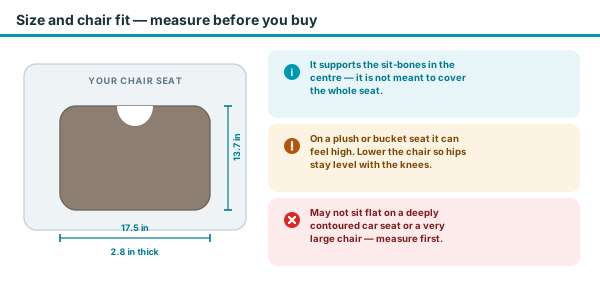
This is the part most reviews skip, and it causes more disappointment than anything else about the cushion. The ComfiLife measures 17.5 x 13.7 x 2.8 inches, and ComfiLife is explicit about what that means: it is engineered to support the sit-bones in the centre of the seat, and it may not cover an entire seat.
- Measure the chair seat first — width and front-to-back depth. If the seat is much larger, expect the cushion to sit as a supportive pad in the middle rather than wall-to-wall coverage. Some owners specifically wish it were a few inches deeper.
- Check the height it adds — 2.8 inches is enough to change your seating position. On a plush or bucket seat it can feel taller still; ComfiLife's guidance is to lower the chair so the knee and hip angle stays right.
- Feet flat, knees level with hips — the test after fitting it. If your feet now dangle, the chair is too high, and a footrest or a lower seat setting fixes what the cushion caused.
- Car seats are the awkward case — ComfiLife notes it may not fit some contoured car seats and large chairs. A deeply bucketed seat will not let it sit flat.
- Desk height matters too — raising yourself 2.8 inches changes your relationship to the desk and the armrests. Worth a moment's adjustment rather than assuming the cushion is wrong.
None of this is a flaw so much as a specification, but it is the specification people discover after ordering rather than before.
How to use it (and get the fit right)
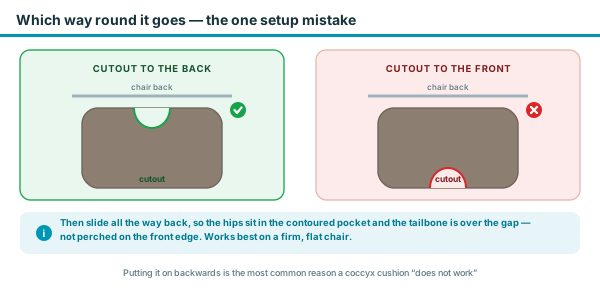
Getting the most out of the cushion is simple, but the details matter:
- Cutout to the back — sit with the U-shaped cutout at the rear, under the tailbone. This is the most common setup mistake; the flat, contoured edge goes toward the front of the knees.
- Sit all the way back — slide back so your hips are in the contoured pocket and your tailbone is over the cutout, not perched on the front edge.
- Use it on a firm chair — the cushion works best on a supportive seat; on a very soft or sagging chair, the benefit is reduced.
- Give it a short break-in — memory foam feels firmest when new, and ComfiLife asks for 24 to 48 hours to settle to your shape.
- Keep the base clean — the non-slip bottom grips best on a clean, dry chair surface.
If someone reports that a coccyx cushion "did nothing", check the orientation before anything else — a reversed cushion puts foam exactly where the gap was supposed to be.
Where it works: recliner, office, wheelchair, car, and travel
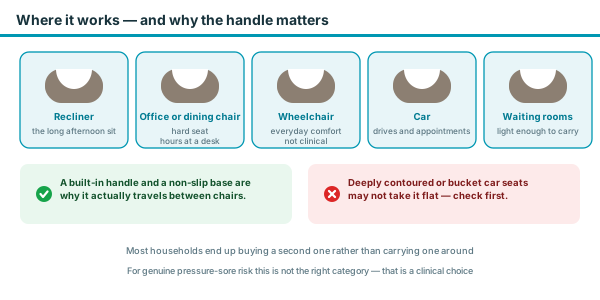
The ComfiLife’s versatility is a big part of its value — it isn’t locked to one chair:
- Recliner or armchair — for the senior who spends the afternoon sitting, it turns a comfortable chair into a genuinely supportive one; pairs well with our afternoon rest guidance.
- Office or dining chair — for hours at a desk or table, the cutout and cooling gel are exactly what a hard chair is missing.
- Wheelchair — the pressure relief and non-slip base make it a practical wheelchair cushion for everyday comfort (though not a substitute for a clinical cushion where skin breakdown is a risk).
- Car — it moves straight to the car seat for drives and appointments, a common reason people search out this exact cushion — with the caveat that a deeply contoured seat may not take it flat.
- Travel and waiting rooms — the built-in handle is what makes this realistic rather than theoretical.
Because it’s one cushion that follows the person from room to room and into the car, most households end up buying a second one rather than carrying it around.
Cover, cleaning, and when to replace it
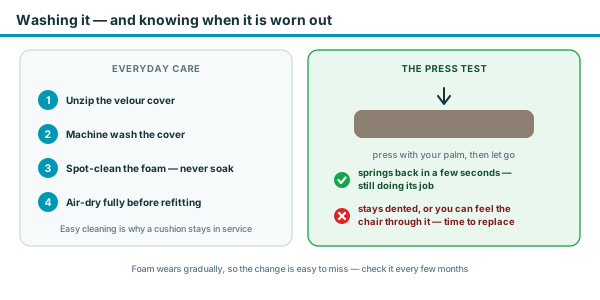
The cover is the part that gets dirty, and ComfiLife made it easy: the zippered velour cover unzips and goes in the washing machine, so spills, crumbs, and everyday grime aren’t a problem. That matters more than it sounds — a cushion that’s awkward to clean tends to get retired early, while a washable one stays in service for years.
The foam itself should be spot-cleaned and air-dried rather than soaked, and refitted only once it is fully dry. Beyond that, there’s essentially no maintenance: the memory foam holds its shape, and the non-slip base doesn’t need anything. For a caregiver managing a lot of small daily tasks, a low-maintenance, washable cushion is one less thing to think about.
Foam does not last forever, and it fails gradually enough that people keep using a dead cushion for months. A simple check every few months: press down firmly with your palm and let go. If the foam springs back within a few seconds, it is still working. If it stays dented, or you can feel the chair frame through it while sitting, the cushion has stopped redistributing pressure and is due for replacement — no amount of cover-washing brings that back.
Who it suits — and who should look elsewhere
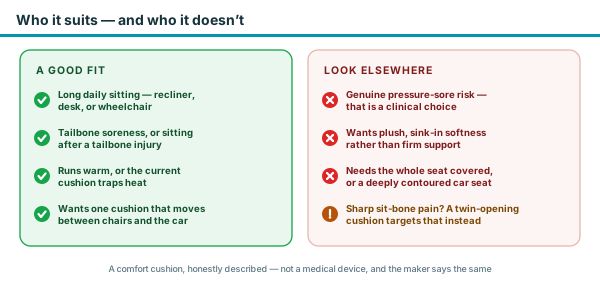
It is a targeted product, so it is worth being clear about fit:
- Long daily sitting — recliner, desk, or wheelchair, where hours in one position are the problem.
- Tailbone soreness or recovery — the cutout addresses exactly this, and it is the strongest reason to choose this shape.
- Anyone who runs warm — the gel layer is the reason to pick this over a plain-foam cushion.
- Households where the cushion travels — the handle and non-slip base earn their place here.
- Not for genuine pressure-sore risk — where skin breakdown is a real possibility, cushion selection is a clinical decision and air-cell designs exist for it; repositioning schedules matter regardless of cushion.
- Not for plush preference or full-seat coverage — a medium-firm pad covering the centre of the seat is what this is.
If the underlying issue is sharp sit-bone pain rather than tailbone pain, a twin-opening "socket" cushion is the better shape to look at.
Common problems, and what actually fixes them
The complaints that come up most, with the fix:
- "It feels far too firm." Usually day one. Give it the 24-48 hours ComfiLife asks for, and remember memory foam is firmer in a cold room — a cushion unboxed in a cold house is at its hardest.
- "It does nothing for my tailbone." Check the orientation first: the cutout must be at the back. Reversed, foam sits exactly where the gap should be.
- "I now sit too high for my desk." Expected — it adds 2.8 inches. Lower the chair until your knees are level with your hips and your feet are flat, then re-check the desk and armrest height.
- "It slides on my chair." The non-slip base grips best on a clean, dry surface; wipe the chair seat. On slippery leather or a loose chair cover, expect some movement regardless.
- "It won't sit flat in my car." Deeply contoured and bucket seats are the known exception — ComfiLife says as much. This is a fit problem, not a fault.
- "It smells new." New foam commonly off-gasses. Unzip the cover and air the foam somewhere ventilated for a day or two before use.
- "The cover shrank." Wash cool and air-dry rather than tumble-drying — a shrunken velour cover will not go back over the foam cleanly.
What ComfiLife says
The following are ComfiLife’s own marketing claims from the product listing, not our independent findings. Figures such as ratings and review counts change over time — check the current Amazon listing for the latest.
- ComfiLife promotes it as one of the best-selling and highest-rated seat cushions on Amazon, with millions sold worldwide.
- The brand says the ergonomic design is developed with, and recommended by, physical therapists and chiropractors.
- ComfiLife highlights the cooling gel as delivering longer-lasting sitting comfort and better temperature regulation than foam alone.
- ComfiLife states the cushion measures 17.5 x 13.7 x 2.8 in, is engineered to support the sit-bones in the centre of the seat and may not cover an entire seat, and can feel taller on plush or bucket seats.
- ComfiLife describes it as medium-firm, asks for 24 to 48 hours after unpacking for full adjustment, and states plainly that it is not a medical treatment and that results vary by chair and body type.
How it compares to other seat cushions
The ComfiLife is our pick when you want a balanced, do-everything cushion for long sitting. Two situations call for something different: targeted posture or sciatica relief, and genuine pressure-sore risk. Here’s where the alternatives fit — all compared in depth in our roundup.
- Cushion Lab Patented Pressure Relief Seat Cushion — a firmer, sculpted shape aimed at posture and sciatica-style discomfort — better for a specific problem, less of an all-rounder.
- Air-cell cushions — the clinical category to consider when skin breakdown or pressure sores are a genuine risk; match cushion type to the risk level with a clinician.
- Orthopedic support pillows — for back, neck, or knee support rather than seat pressure relief — a complementary buy, not a substitute.
Frequently asked questions
It measures 17.5 x 13.7 x 2.8 inches. ComfiLife is explicit that it is engineered to support the sit-bones in the centre of the seat and may not cover an entire seat, so measure your chair before ordering — on a large seat it works as a supportive pad in the middle rather than wall-to-wall coverage. It may also not sit flat on a deeply contoured or bucket car seat.
Almost always because it is new, cold, or both. ComfiLife asks for 24 to 48 hours after unpacking for the foam to fully adjust, and memory foam is temperature-sensitive — the brand notes it feels firmer in the cold and softer in the warm, with room temperature ideal. It is a medium-firm cushion by design, not a plush one, so if you want sink-in softness this is the wrong shape rather than a faulty one.
Yes — this is its main strength. The U-shaped cutout at the back removes contact under the tailbone, so your weight is carried by the hips and thighs while the coccyx floats free. That makes it a strong choice for ongoing tailbone pain and for recovering from a tailbone injury. If your pain is sharp sit-bone pain rather than tailbone pain, a twin-opening "socket" cushion is a better fit.
Sit with the U-shaped cutout at the back, under your tailbone, and the contoured edge toward the front of your knees — putting it the wrong way round is the most common mistake, and it is the first thing to check if the cushion seems to do nothing. Slide all the way back so your hips sit in the contoured pocket and your tailbone is over the cutout. It works best on a firm, supportive chair.
Both. It uses a block of high-density memory foam for contouring support, topped with a cooling gel layer that spreads weight and helps regulate temperature. The combination is the point: you get memory-foam comfort without the heat buildup that plain foam causes over long sitting sessions, which is why it suits seniors who sit for hours.
Yes — it works well as a car seat cushion and moves easily between the car, a recliner, an office chair, and a wheelchair, helped by its built-in carry handle. The one exception ComfiLife names is deeply contoured seats: on a bucket-style car seat it may not sit flat, and it will feel taller than it does on a firm flat chair, so lower the seat if your knee and hip angle changes.
Yes. The zippered velour cover unzips and is machine-washable, so spills, crumbs, and everyday grime are easy to deal with. Wash cool and air-dry rather than tumble-drying, which can shrink it. Spot-clean and air-dry the foam itself rather than soaking it, and refit the cover only once everything is fully dry.
Memory foam wears gradually rather than failing outright, which is why people often keep using a cushion long after it has stopped helping. Check it every few months: press down firmly with your palm and let go. If it springs back within a few seconds it is still working; if it stays dented, or you can feel the chair through it while seated, it has stopped redistributing pressure and needs replacing.
For everyday comfort, yes — the pressure relief, cooling gel, non-slip base, and carry handle make it a practical cushion for seniors in recliners, office chairs, and wheelchairs. The important exception is genuine pressure-sore (skin breakdown) risk: that is a clinical decision where an air-cell cushion and a clinician’s input are the right path, and regular repositioning matters regardless of the cushion. ComfiLife itself states the cushion is not a medical treatment.
ComfiLife Gel Enhanced Memory Foam Seat Cushion
Best for: A senior who sits for long stretches in a recliner, office chair, or wheelchair
We may earn a commission, at no cost to you.
