
Sudden Hearing Loss in Seniors: A Medical Emergency
Unlike the slow hearing loss of aging, hearing that drops suddenly — often in one ear — is a medical emergency where treatment is time-critical. Knowing to act fast can save a person’s hearing.
Founder & Senior Care Researcher

Medically reviewed by Dr. Shifin Shad PN, MBBS, BCCPM · Reviewed 23 July 2026
Educational guidance, not a substitute for medical care. If hearing drops suddenly, seek urgent medical attention right away — timing genuinely affects the outcome.

Key takeaways
- Sudden hearing loss — a rapid drop over hours to a few days, usually in one ear — is a medical emergency, not ordinary age-related loss.
- Treatment is time-critical: steroids work best started within 72 hours of the hearing loss. They can still be given up to about two weeks after onset, but the chance of recovery falls the longer you wait — so do not "wait and see", see a doctor the same day.
- It is often mistaken for earwax or a cold-related blocked ear — but true sudden sensorineural loss needs urgent assessment.
- It may come with ringing (tinnitus), dizziness, or a feeling of fullness in the ear.
- Sudden hearing loss with stroke signs (weakness, facial droop, slurred speech, severe dizziness) needs emergency care immediately.
Quick answer
Is sudden hearing loss in seniors an emergency?
Yes. A sudden drop in hearing over hours to a few days — typically in one ear — is a medical emergency called sudden sensorineural hearing loss, and the sooner treatment starts the better. Steroids work best when started within 72 hours of the hearing loss. They can still be given up to about two weeks after onset, but the chance of recovering hearing falls the longer treatment is delayed, and beyond two weeks the treatment becomes less effective. Do not assume it is earwax or a passing cold and wait it out; seek urgent medical care right away (same day). If it comes with weakness, facial droop, slurred speech, or severe dizziness, call emergency services — those are stroke signs.
Why this is different from age-related hearing loss
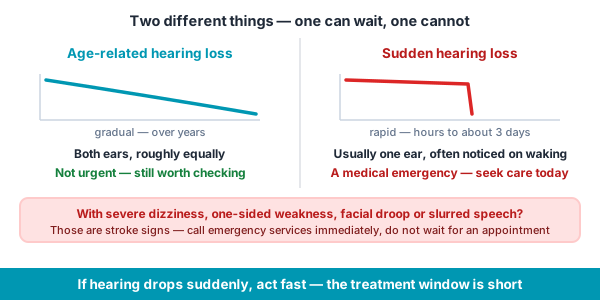
The hearing loss most seniors experience develops slowly over years and affects both ears roughly equally — it is not urgent, though it deserves attention (see signs hearing loss is getting worse). Sudden hearing loss is a completely different situation. Here, hearing drops rapidly — over a few hours to three days — usually in one ear, and often noticed on waking or during a single day.
This is treated as a medical emergency because prompt treatment can make the difference between recovering hearing and losing it permanently. The tragedy is how often it is dismissed as wax or a blocked ear from a cold, and by the time it is taken seriously, the window for the most effective treatment has closed. The single most important message of this guide: if hearing drops suddenly, act fast.
Safety first
Sudden hearing loss with severe dizziness, weakness or numbness (especially one-sided), facial droop, or slurred speech can indicate a stroke. Call emergency services immediately — do not wait for a routine appointment.

Sponsored Pick
HOMLAND Adjustable Toilet Seat Riser Frame
A heavier user, or any bathroom where a clamp-on seat has shifted or the toilet itself feels loose
Check it outHow to recognize it
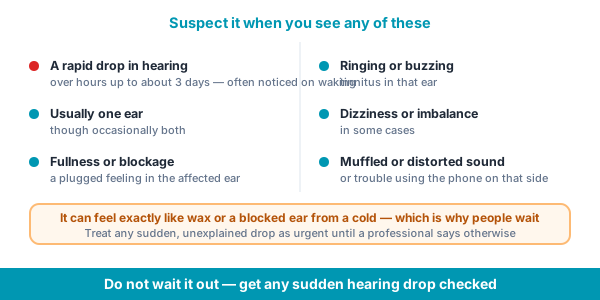
Suspect sudden sensorineural hearing loss when someone experiences:
- A rapid drop in hearing, over hours up to about three days — often noticed on waking or realizing one ear "isn’t working."
- Usually one ear, though occasionally both.
- A feeling of fullness or blockage in the affected ear.
- Ringing or buzzing (tinnitus) in that ear.
- Dizziness or a sense of imbalance in some cases.
- A sense that sounds are muffled or distorted, or difficulty using the phone on that side.
Because a blocked ear from wax or a cold can feel similar, people often wait — but the safe course is to treat any sudden, unexplained hearing drop as urgent until a professional confirms otherwise.
What to do right now
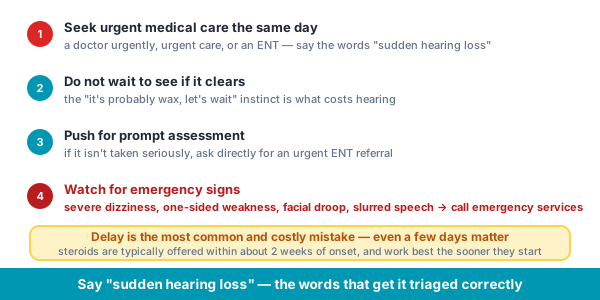
Speed is the whole point. If you suspect sudden hearing loss:
- 1
Seek urgent medical care the same day
Contact a doctor urgently, go to an urgent-care or emergency department, or ask specifically to see an ENT (ear, nose and throat) specialist as soon as possible. Say the words "sudden hearing loss" so it is triaged correctly.
- 2
Do not wait to see if it clears
Resist the "it’s probably wax, let’s wait" instinct. Treatment is most effective within the first few days, so waiting can cost recovery.
- 3
Push for prompt assessment
If the first contact does not treat it seriously, advocate — ask directly for an urgent ENT referral. The time-sensitive nature justifies persistence.
- 4
Watch for emergency signs
If dizziness is severe or there are any stroke signs (one-sided weakness, facial droop, slurred speech), treat it as an emergency and call emergency services.
Watch out
The most common and costly mistake is delay. Even a few days matter — the earlier treatment starts, the better the chance of recovering hearing.
What causes it
In many cases the exact cause is never identified, which does not change the need for urgent treatment. Known and suspected causes include:
- Viral infections affecting the inner ear or hearing nerve — one of the more common associations.
- Circulation or blood-flow problems to the inner ear.
- Autoimmune or inflammatory conditions.
- Certain medications that can be toxic to the ear.
- Inner-ear disorders, and rarely, a tumor on the hearing nerve or a neurological cause.
- Head injury or sudden pressure changes.
Because some causes are serious and some are treatable, urgent professional assessment is essential — both to start treatment and to investigate the reason.
Treatment and after
Treatment is a medical decision, but families often ask what to expect. Doctors frequently treat sudden sensorineural hearing loss with steroids (as tablets or sometimes injected into the ear) to reduce inflammation, ideally started as early as possible, alongside investigating the cause. Outcomes vary — some people recover fully, some partially, and some not — which is precisely why acting fast to maximize the chance of recovery matters so much.
If hearing does not fully return, support and rehabilitation help. Depending on the outcome, hearing aids or other devices, communication strategies, and the wider hearing and vision support at home approaches can substantially improve daily life. And because any hearing loss affects safety and balance, revisit fall prevention — see hearing loss and fall risk.
Frequently asked questions
Is sudden hearing loss a medical emergency?
Yes. A sudden drop in hearing over hours to a few days, usually in one ear, is a medical emergency called sudden sensorineural hearing loss. Steroids work best when started within 72 hours of the hearing loss. They can still be given up to about two weeks after onset, but the chance of recovering hearing falls the longer treatment is delayed, and beyond two weeks the treatment becomes less effective. Seek urgent medical care the same day rather than waiting to see if it clears. Sudden hearing loss with stroke signs needs emergency services immediately.
How quickly do you need treatment for sudden hearing loss?
As fast as possible — the chance of recovering hearing is best when treatment starts early and declines the longer it is delayed. Steroids work best when started within 72 hours of the hearing loss. They can still be given up to about two weeks after onset, but the chance of recovering hearing falls the longer treatment is delayed, and beyond two weeks the treatment becomes less effective. This is why sudden hearing loss should never be treated as something to wait out; contact a doctor or ENT urgently the same day.
How is sudden hearing loss different from age-related hearing loss?
Age-related hearing loss develops slowly over years and affects both ears fairly equally, and is not urgent. Sudden hearing loss drops rapidly over hours to a few days, usually in one ear, and is a medical emergency where prompt treatment can save hearing. The two are often confused, which dangerously delays care.
What are the signs of sudden hearing loss?
A rapid drop in hearing (over hours to about three days), usually in one ear, often noticed on waking; a feeling of fullness or blockage in that ear; ringing or buzzing (tinnitus); sometimes dizziness or imbalance; and muffled or distorted sound. Because it can feel like a blocked ear from wax or a cold, treat any sudden unexplained drop as urgent.
What causes sudden hearing loss in seniors?
Often the exact cause is never found. Known associations include viral infections of the inner ear or hearing nerve, blood-flow problems, autoimmune conditions, certain ear-toxic medications, inner-ear disorders, and rarely a tumor on the hearing nerve or a neurological cause. Because some causes are serious and some treatable, urgent assessment is essential.
Can sudden hearing loss be reversed?
Sometimes. With prompt treatment (often steroids) started as early as possible, some people recover fully, some partially, and some not at all. The chance of recovery is best when treatment begins within the first few days — which is exactly why acting urgently rather than waiting is so important.
